
Mercer Neighbors Record Sources
Records about a Mercer block come in layers. The public parcel map establishes shape, PIN, block, lot, and adjacent lots. A tax or assessor record can show a tax owner, situs, mailing address, assessment, and list vintage where the source releases them. The Clerk supplies deeds and legal descriptions. A municipal permit file can explain work or a land-use event. None of those sources turns a property association into proof of every person who occupies a home.
| Source | What It Shows About a Block | Access |
|---|---|---|
| NJGIN / Property Explorer | Parcel shape, PIN, block, lot, map context and adjoining parcels | Public map; NJGIN owner names redacted |
| Mercer Clerk deed index | Grantor, grantee, legal description and title clues | Public search or Records Room |
| Municipal assessor | Tax owner, mailing and situs addresses, assessment and classification | Local portal, counter, or focused OPRA request |
| Mercer voter file | Records allowed by election law for a stated request | OPRA request; no public block web list |
| Municipal permits and zoning | Address, application or review history as released | Town office or OPRA route |
| Trentoniana directories and maps | Historical names, street context and building history | In-room research and dated lookup routes |
For current Mercer neighbors, capture the source date and say exactly what it records. A deed records a transfer. A tax card records a tax association. A directory preserves a historical listing. Each one is useful because its limits are known.
Map Mercer Neighbors Parcel by Parcel
The documented public method is click-adjacent map browsing. Search a complete address in the state map or first standardize it through the municipality lookup. Identify the target parcel, then pan or zoom and click the polygons immediately around it. NJGIN documents address, county, municipality, block, lot, parcel, and tax-block tools. It does not document a separate public radius or buffer procedure, so a claimed distance search should not replace the adjacent-parcel method.
- Use NJ Municipality Address Lookup to confirm the standardized address and legal municipality.
- Open NJ Property Explorer, find the target address, and record its PIN, block, lot, municipality, situs, and tax-list vintage.
- Click each immediately adjoining parcel and record its separate PIN, address, block, lot, and visible tax context.
- Use the Mercer Clerk index with town plus lot/block or legal description for a recorded transfer, not a guess about occupancy.
- For a longer named-street record trail, shift to the Mercer street directory rather than expanding a one-block worksheet.
The parcel handoff separates nearby lots accurately even when a road curves, a postal city spans municipalities, or a map label is ambiguous.
Property Explorer’s entry point describes the address, owner, county, municipality, and block-and-lot paths used for this Mercer neighbor process.
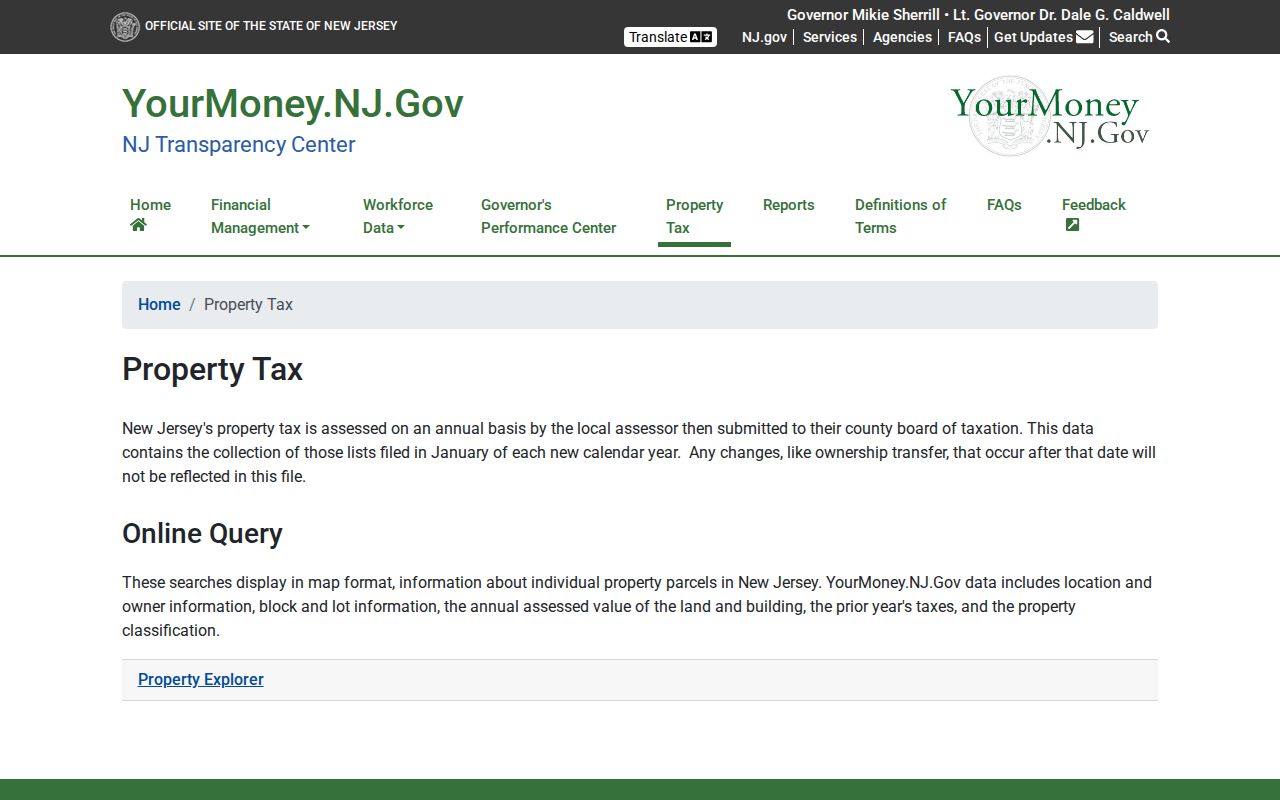
Use the property result as a dated tax layer. A deed recorded after the January tax list may show a later transfer.
Mercer Owner and Occupant Are Different
The situs address is the physical parcel location. A mailing address is where an assessment or tax bill goes, and it can be another home, a business, a trust, or an agent. An owner listed in a tax layer may not occupy the site. Conversely, public tax and deed sources do not enumerate renters, guests, children, or other household members. The useful claim is narrow: a record associates a named owner or mailing address with a parcel on a certain date.
Mercer’s public Property Information Portal is closed to anonymous and registered public users because of Daniel’s Law. The public alternative is not one substitute owner directory: use Clerk deeds for documents, Property Explorer for annual tax context, NJGIN for map geometry, and the municipal custodian for a particular released record. State-hosted parcel owner names are redacted for protected-person compliance.
NJGIN’s Mercer parcel service information explains its redaction and non-survey limitations.
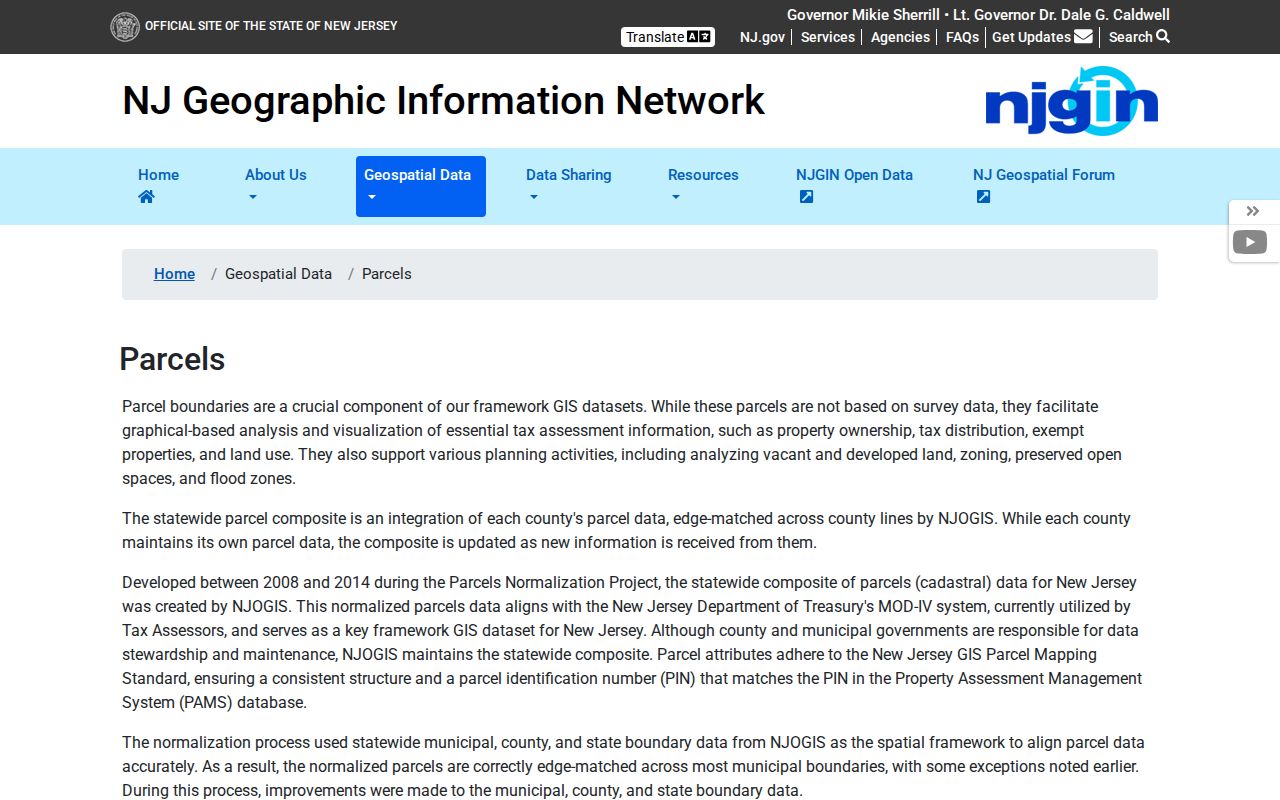
Parcel polygons locate a lot. They are not a legal ownership boundary and should not be used as a survey.
Mercer Neighbor Voter Requests
The public New Jersey voter tool is person-first. It requires first name, last name, and birth month and year, and it may confirm status and voting information released to the voter. It is not a public way to type a street or ZIP and retrieve the neighbors. The full-file route is a Mercer OPRA request to the Superintendent of Elections that states the requester’s name, address, particulars, and the county’s no-commercial-use sentence.
Request only the lawful, needed geography and format, such as municipality, ward, district, and date. Protected voters, ACP participants, and Daniel’s Law addresses can be withheld or substituted. Ballot choices are never disclosed. A list result is still an election record, not confirmation that each listed person currently lives at an address.
Note: Use a block’s parcel and municipal fields to make an exact voter-file request rather than asking for an unrestricted list of Mercer neighbors.
Mercer Block Changes Leave Records
Municipal construction, zoning, and inspection records can add a public event to a block history. Trenton’s Division of Inspections identifies building, plumbing, electrical, fire-protection, elevator, zoning, maintenance, and land-use functions, but its public page does not provide a broad online name or address search. Call the stated permit lines or request a specific address-and-date-range log from the municipal custodian when the record is not posted.
A permit can identify an application, owner, applicant, project address, review, or final status if released. It does not prove that the applicant lives there. For older blocks, Trentoniana’s in-room directories, telephone books, Sanborn sheets, tax cards, and atlases can connect a historical name to an address or building footprint. Historical material belongs to a date, so preserve the year with the result.
Mercer Neighborhood Public Contacts
Community organizations can offer a public contact route without becoming a household roster. Princeton’s official material describes neighborhood groups as often informal associations, email lists, and potluck groups. A municipal Witherspoon Street notice identifies a WJ Neighborhood Association contact in a public improvement context. Trenton has civic organizations and neighborhood centers, but the research did not find a public membership directory. Contact paths and meeting notices are the appropriate level of detail.
| Organization or channel | Public record role | Appropriate use |
|---|---|---|
| WJ Neighborhood Association, Princeton | Public project notice identifies an association contact route | Ask about public meeting or project information, not private membership |
| Trenton Council of Civic Associations and Downtown Association | Civic and municipal community context | Use public meeting or municipal contact channels |
| Princeton boards and commissions | Published public appointments and meeting records | Confirm civic participation only |
| Mercer neighborhood centers | Community-service contacts in Princeton, Lawrence, Hamilton, Hightstown, and Trenton | Community context, never a resident list |
Public civic information can explain who represents an organization or where a meeting occurs. It does not establish who lives in a neighborhood or belongs to a private group.
Mercer Neighbor Sources Compared
Official sources explain where each fact came from and when it was recorded. Commercial neighbor-search products are a different category: they can combine old public records, marketing data, and unverified address history. That can be convenient, but it also creates same-name merges, stale entries, and unclear source dates. Use the custodian’s source when accuracy or a correction matters.
| Source type | Strength | Limit |
|---|---|---|
| Official parcel, tax, deed, or permit record | Named custodian, record date, field definitions, and a request route | Each record answers a narrow question and may be redacted |
| Commercial neighbor-search category | May collect several data types in one view | Can merge people, omit source dates, or retain old associations |
| Public community contact | Provides a meeting or organization channel | Not a membership or household directory |
When a record is wrong, ask the original custodian for its correction path. Keep the record date, parcel key, and a copy of the source rather than relying on an unexplained compiled result.
Mercer Property Alert for Your Parcel
Mercer’s free Property Alert is for watching a parcel or party name connected to a recorded-document concern. After account confirmation, a subscriber can add municipality, block and lot, legal description, or a party name. The service says documents pass through verification before public-search availability, and an alert does not prevent a filing. It is a notice tool, not proof of fraud or ownership.
The Clerk’s Property Alert registration path shows the party-name and legal-description monitoring options.
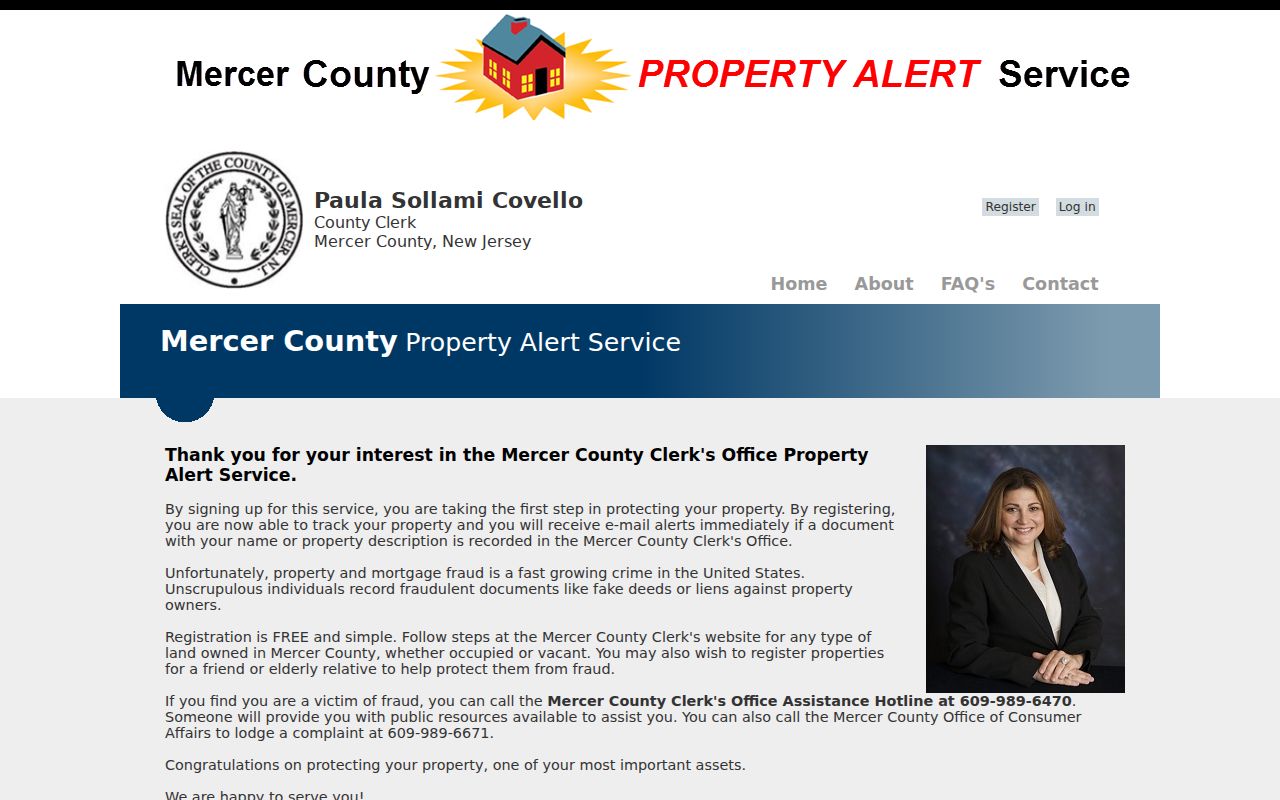
For a suspicious recorded document, preserve the instrument details and contact the Mercer Clerk rather than relying on a mailed solicitation.
Mercer Neighbor Privacy Limits
Daniel’s Law protects covered officials and qualifying household members by coordinating home-address redaction. The New Jersey Address Confidentiality Program provides a substitute address for eligible safety participants. OPRA also protects items including phone numbers, month and day of birth, driver-license numbers, and protected addresses. Utilities, delivery data, private association rosters, and every household member are not public block lists.
New Jersey’s Office of Information Privacy administers Daniel’s Law protections. The state reported more than 10,000 covered people in April 2025, which helps explain Mercer’s closed PIP and redacted parcel owners.
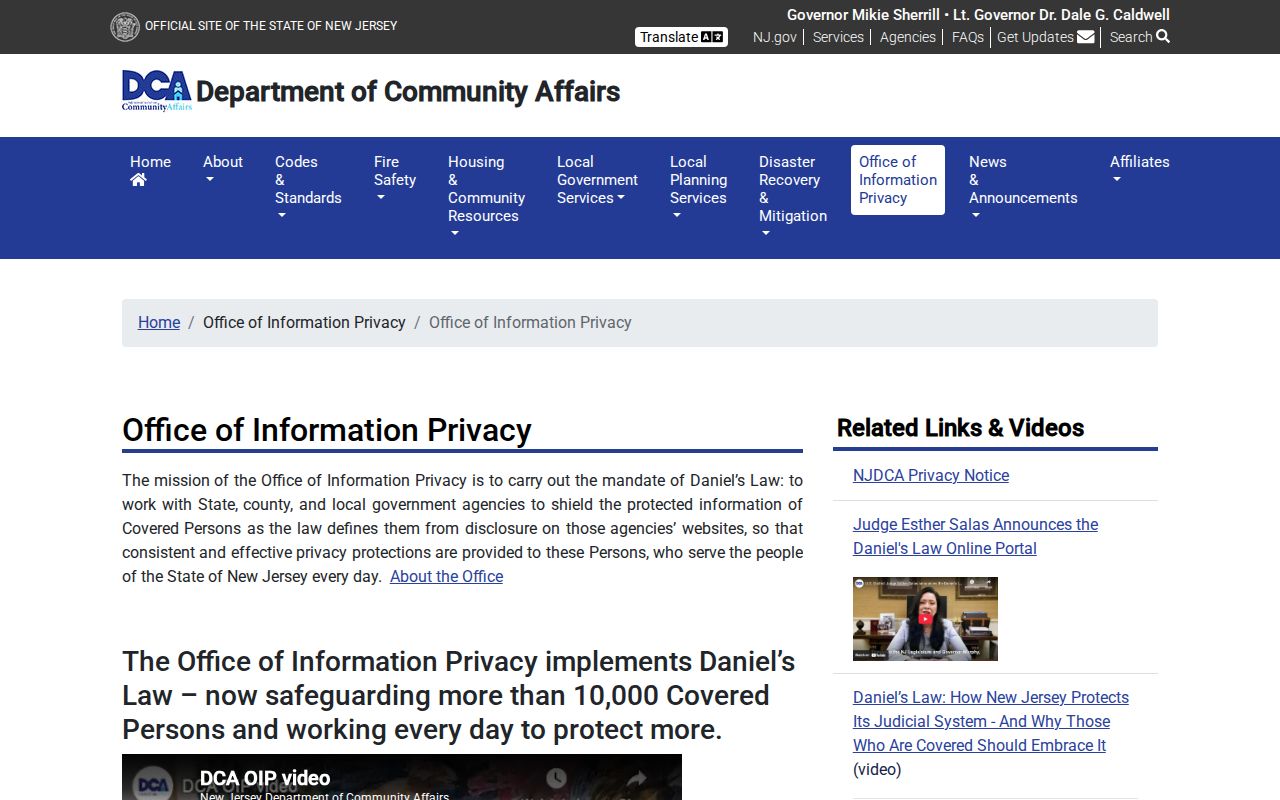
Redaction is a legal protection, not an invitation to find another route around it.
Lawful use. Use Mercer neighbor records for personal, lawful property, history, civic, or safety research. New Jersey law does not allow public information to be used to stalk, harass, intimidate, or harm anyone.